
Sharing is Hard: Teaching Toddlers Essential Social Skills

Spartanburg Care: Finding Safe, Nurturing Infant Programs
November 4, 2025
Toddler Health: How Spartanburg Parents Stay Safe Now
November 11, 2025
If you have a toddler, you know the sound well: the sudden shriek, the frustrated stomp, and the familiar cry of “MINE!” Toddlerhood is a wonderful time of rapid development, but it’s also a deeply possessive age. They are just discovering that they are their own independent person, and their favorite toy is an extension of that newfound self.
It’s easy for us as adults to see two children fighting over a truck and think, “Why don’t they just share?” But for a two or three-year-old, being asked to share feels like being asked to give up a limb! They lack the cognitive ability to truly understand concepts like “taking turns” or “I will get this back later.”
The good news? This is a completely normal developmental stage, and it’s the perfect time to start planting the seeds of essential social skills. This process takes patience, practice, and a whole lot of encouragement.
For more insights on sharing and cooperation, we recommend this guide from Teaching Social Skills to Kids at Home
Why Sharing Isn’t Natural (Yet!)
Understanding why toddlers struggle helps us respond better. Toddlers operate primarily in the present moment. They don’t have the “theory of mind” yet—the ability to understand that other people have different thoughts or feelings than their own. When they grab a toy, they aren’t trying to be mean; they are acting on instinct and intense desire. Their world revolves around them, and that’s exactly how they are meant to be developing!
Four Simple Steps to Building Social Skills
Instead of forcing a toddler to surrender a toy (which often teaches them that aggression gets results), focus on building foundational social skills like empathy, turn-taking, and cooperation.
1. Narrate Feelings and Validate: When a sharing conflict happens, your first job is to calm the storm and narrate the emotions involved.
“I see you are really angry that Leo took the block. You were using that! And Leo, I see you really want a turn, but screaming is not okay. It makes our friends sad.” Validation helps both children feel seen, which is crucial for emotional regulation.
2. Introduce the Concept of “Taking Turns” (Not “Sharing”): “Sharing” is too abstract. “Taking turns” is a measurable, time-bound activity. Use a simple visual timer (like a sand timer) to set expectations for the next few minutes.
“When the sand runs out, it will be Mia’s turn for the red truck. Until then, you can play with the blue car.” When the timer goes off, prompt the child to hand over the toy and praise them profusely when they do—even if they cry afterward. Praise the effort to cooperate.
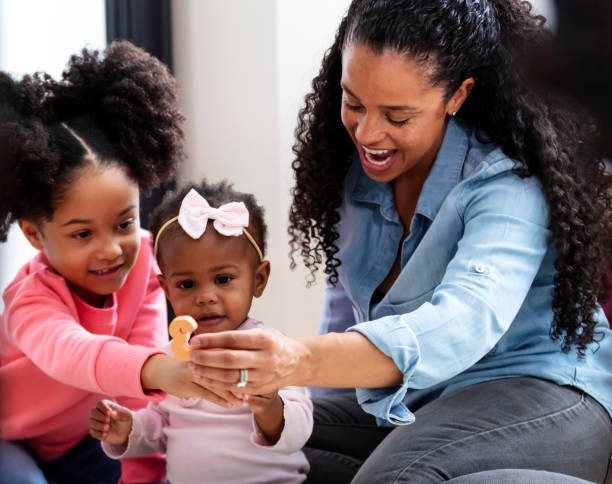
3. Use “Special” and “Group” Toys: At home, designate certain toys as “special” (meaning they don’t have to be shared when friends come over) and put them away before guests arrive. This respects the child’s need for ownership. The toys left out become “group toys” that are automatically available for negotiation and turn-taking practice.
4. Practice Outside of Conflict: The best time to learn social skills isn’t during a meltdown! Practice in low-stakes situations. Practice taking turns putting puzzle pieces in, or rolling a ball back and forth. Use books that model sharing behavior and talk about the characters’ feelings. When they master a small turn-taking activity, celebrate it!
At Children’s Academy of Spartanburg, we use a compassionate care approach and our play-based activities are designed to naturally foster social development, independence, and language enrichment in a safe, structured environment. We believe that with consistent, encouraging guidance, every child can learn to navigate the world of friendships and cooperation.
Call Children’s Academy of Spartanburg today to learn more about our programs and schedule a tour!
Children’s Academy of Spartanburg
📍 195 S Converse St, Spartanburg, SC 29306
📞 (864) 595-3727
📧 thechildrensacademy4k@yahoo.com
🌐 https://childrensacademyofspartanburg.com/
